
The Fabric Said It Might Bleed. Here’s Why We Tested It Anyway…
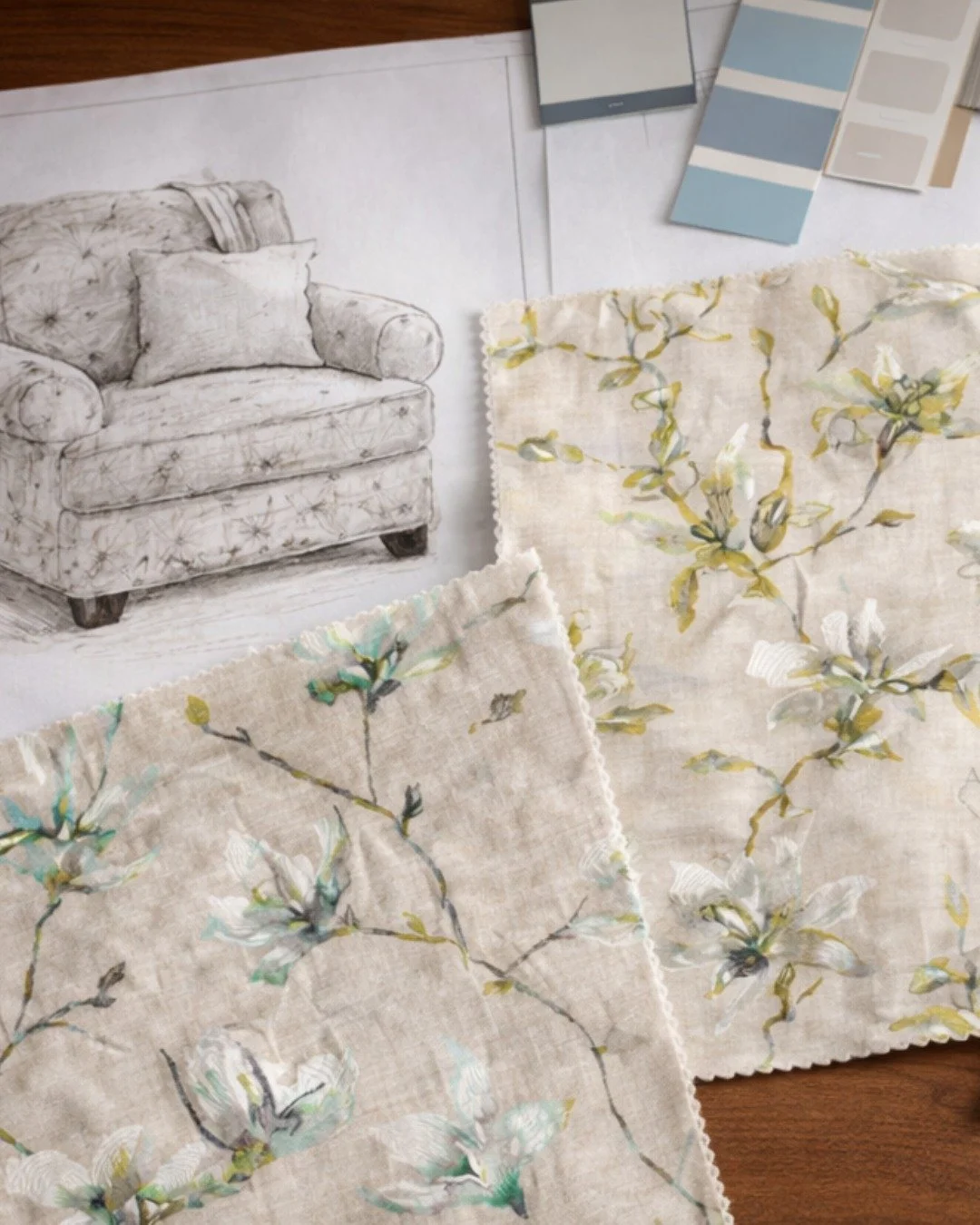
There’s a moment in almost every design project when instinct and caution collide.
You’ve found the fabric. It’s the right scale, the right mood, the piece that finally makes the room feel intentional. It’s not trying too hard, it’s not generic, and it doesn’t look like something meant to be replaced in three years.
Then you check the fabric tag.
Color may run.
Treatment not recommended.
For many designers, that’s the point where the conversation shifts. Not because the fabric is wrong, but because the risk suddenly feels personal. No one wants to promise something they can’t stand behind.
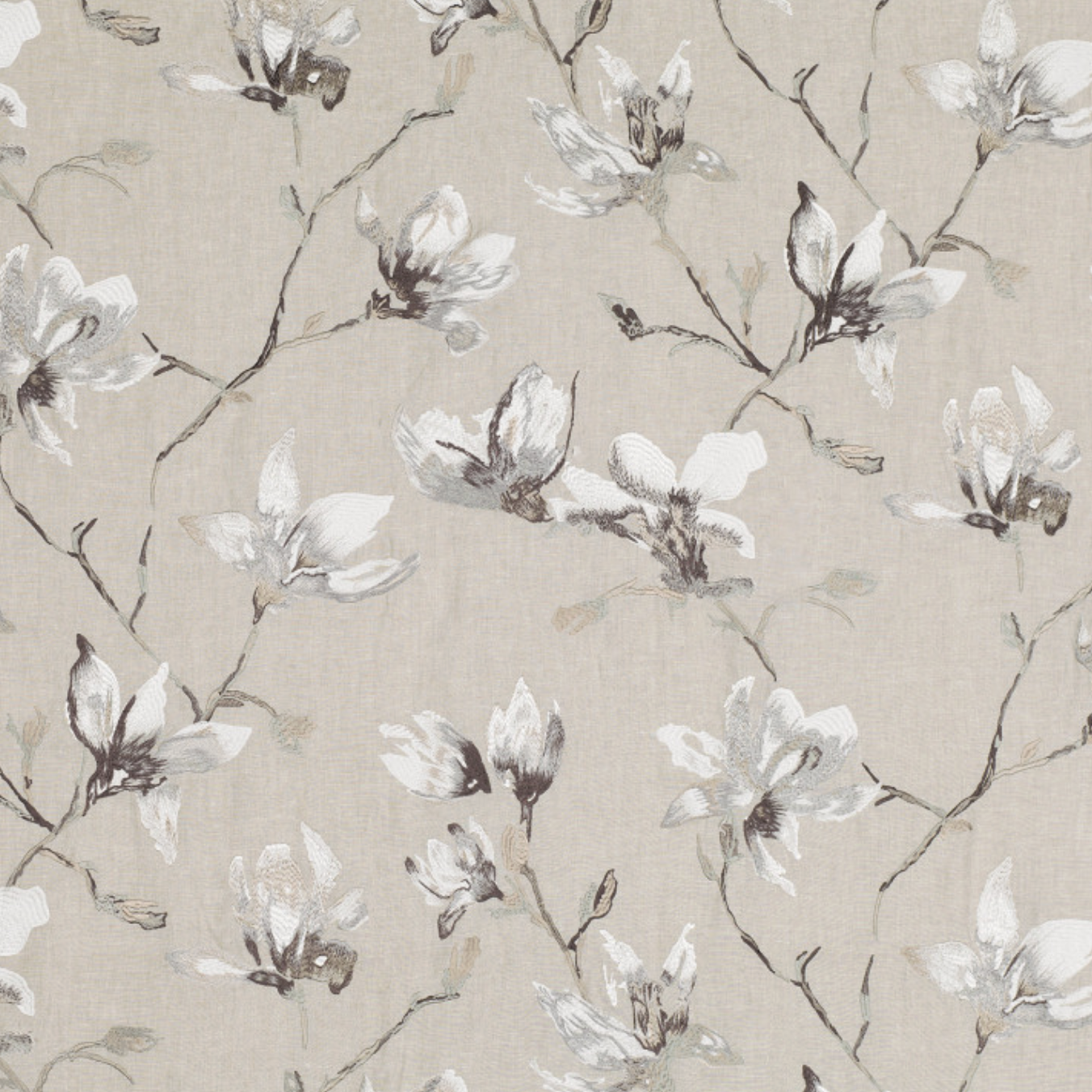
Saphira Embroidery Slate
Interior designer Katie Canfield of Studio KC Interiors found herself in exactly that position while refreshing a client’s living space. The project centered around a beloved chair, one that would be used daily, in a home with a dog prone to accidents. The client had a clear request: bold florals, something expressive and beautiful, not a synthetic workaround or a performance fabric in disguise.
Katie found the perfect floral from Romo (pictured above). But there it was, right on the tag, a warning about potential color bleeding if treated.
Instead of walking away or defaulting to a safer option, Katie did something that experienced designers do best. She tested first.
Rather than guessing or reassuring her client with maybes, she reached out to FiberSeal and asked a simple, practical question: can we see how this fabric behaves when treated, before committing to upholstery?
She mailed in a fabric memo. We treated it. Then we sent it back.
And then Katie did the most important part of the process, she put it to the test in real life.
At home. In her kitchen. With salsa.
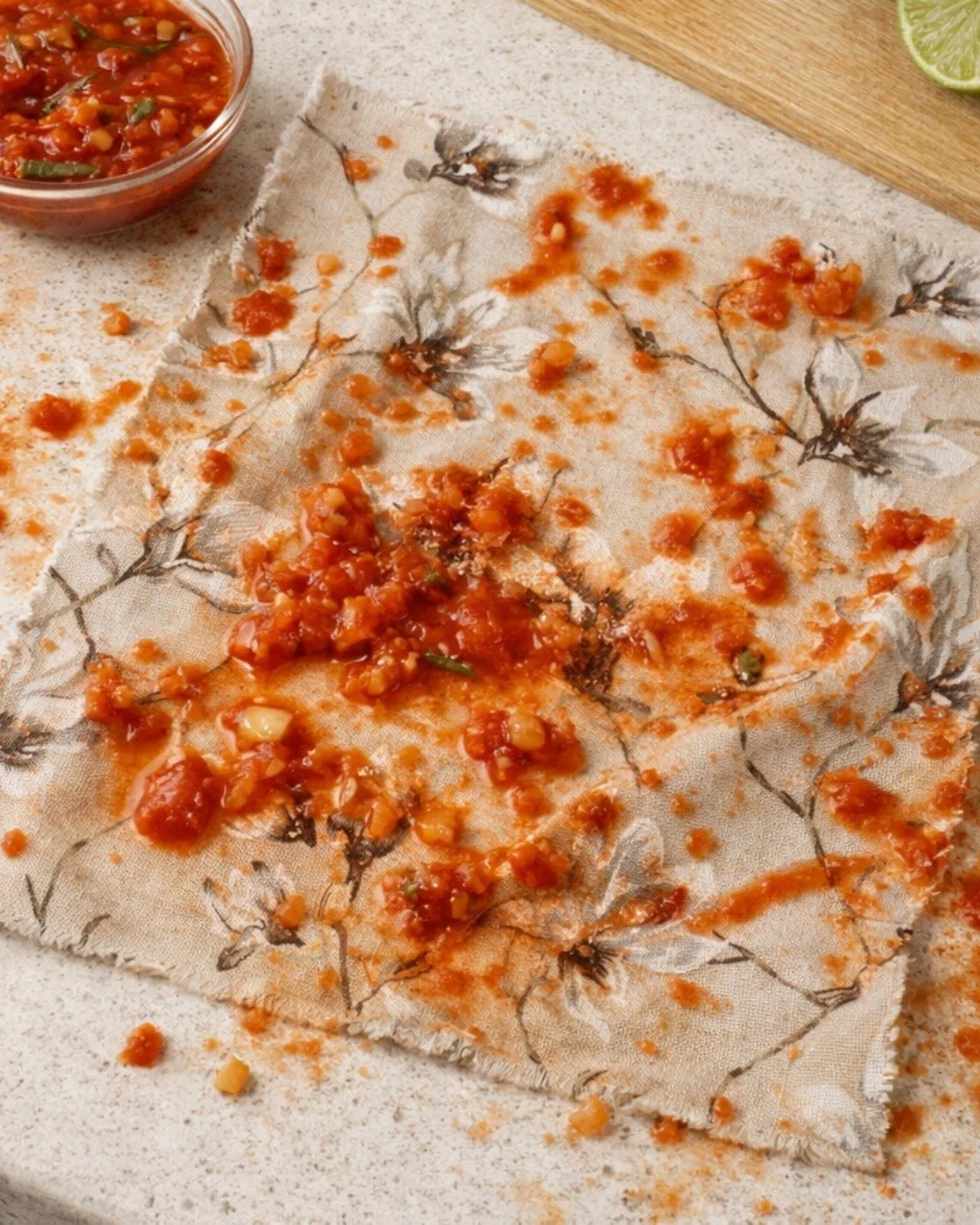
Not a laboratory test, not a hypothetical scenario, but a real spill on a real fabric. If the color was going to run, she wanted to know before hundreds or thousands of dollars went into fabric and labor.
It didn’t bleed.
It didn’t shift.
It held.
That one test changed everything. Katie was able to move forward with confidence, her client got exactly the fabric she wanted, and the design didn’t have to be compromised out of fear.
This is what FiberSeal is designed to do.
We don’t believe great design should be limited to materials that are disposable, synthetic, or chosen purely out of caution. We also don’t believe designers should have to gamble their reputation on hope.
Protection works best when it’s part of the process, not an afterthought.
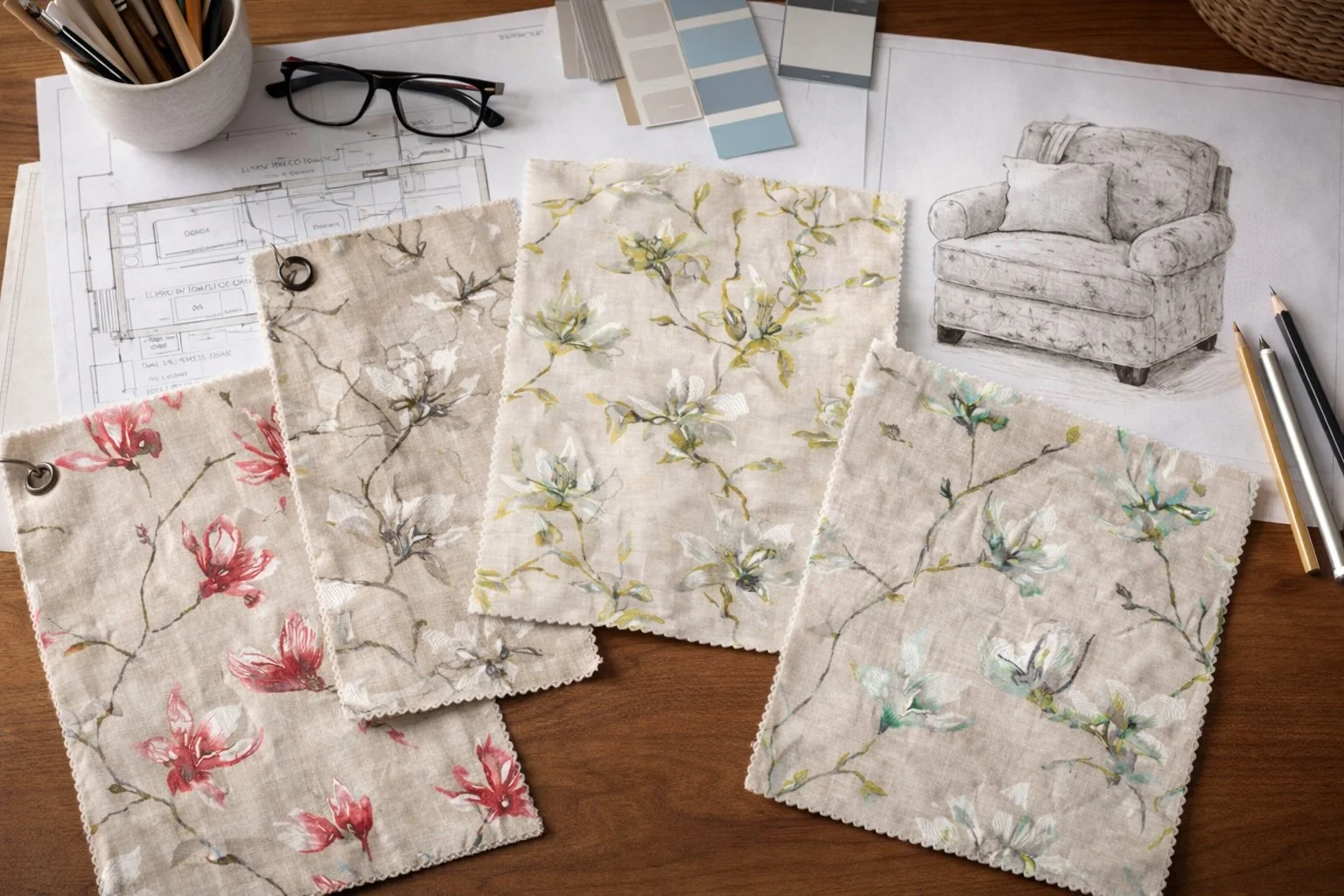
When designers test first, they gain something invaluable, peace of mind. Not just for their clients, but for themselves. It allows for honest conversations, confident recommendations, and better outcomes across the lifespan of a home.
Homes change. Families grow. Pets age. Spills happen. What shouldn’t change is the integrity of the design choices made along the way.
Testing gives designers the ability to say yes, thoughtfully. Yes to florals. Yes to velvet. Yes to materials that feel good, age well, and weren’t meant to be thrown away.
When a fabric label gives you pause, that doesn’t have to be the end of the story. Sometimes, it’s the beginning of a better one.
At FiberSeal, we’re here to help designers expand possibilities, not narrow them. To protect the pieces that matter, and to support the decisions that make a home feel truly lived in.
Because great design deserves to last